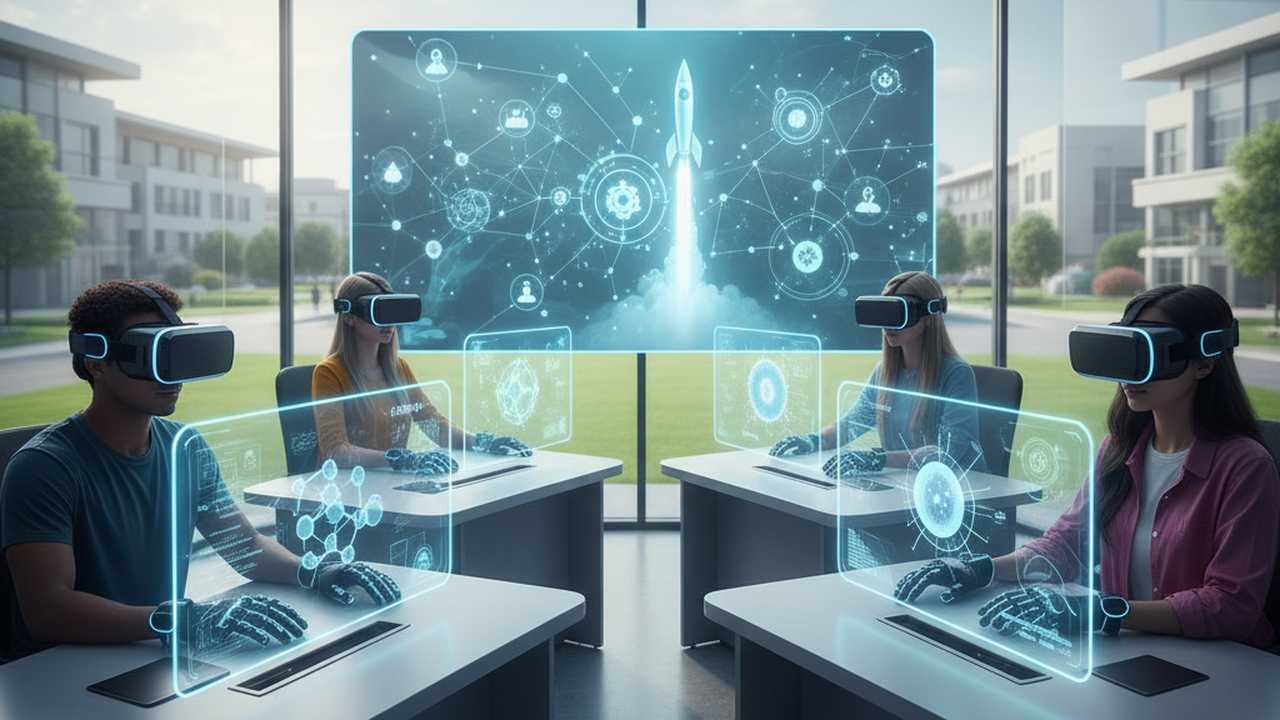
In the rapidly evolving landscape of education, traditional classrooms are being left behind. The future is now, and it’s immersive, interactive, and undeniably urgent. If you’re not yet harnessing the power of virtual labs in STEM education, you’re already falling behind. The clock is ticking, and the gap between those who adapt and those who don’t is widening. Don’t let your students miss out on the transformative experiences that virtual labs offer. Dive into the world of experiential STEM learning and ensure your educational approach is as forward-thinking as the technology itself.
The Urgency of Integrating Virtual Labs in STEM Education
The educational world is at a crossroads. On one side, traditional methods that have served us for decades; on the other, a wave of technological advancements that promise to revolutionize learning. Virtual labs are at the forefront of this revolution, offering students the chance to engage with STEM subjects in ways that were previously unimaginable. Imagine a biology student dissecting a frog without the ethical concerns or environmental impact. Picture a physics learner experimenting with gravitational forces in a zero-friction environment. These scenarios are not just possibilities; they’re realities made possible by virtual labs.
Yet, despite their potential, many educational institutions remain hesitant to adopt this technology. The reasons vary: budget constraints, lack of technical expertise, or simply inertia. But the cost of inaction is steep. Students who don’t have access to these immersive experiences are at a distinct disadvantage. They’re missing out on the opportunity to engage deeply with the material, to make mistakes and learn from them, and to develop a genuine passion for the subject matter. In a world that increasingly values hands-on experience, virtual labs provide that and more. They offer a safe, scalable, and engaging way to bring STEM education into the 21st century.
What Are Virtual Labs and Why Do They Matter?
Virtual labs are digital platforms that simulate real-world laboratory experiments and environments. They allow students to conduct experiments, make observations, and draw conclusions, all within a virtual space. These labs can replicate everything from chemical reactions to ecological systems, providing a rich, interactive experience that traditional textbooks simply can’t match.
The significance of virtual labs extends beyond their ability to simulate experiments. They democratize access to quality STEM education. Students in remote areas, those without access to well-equipped laboratories, or those with physical disabilities that make traditional labs challenging can all benefit from virtual labs. They level the playing field, ensuring that every student, regardless of their circumstances, has the opportunity to engage with and excel in STEM subjects.
The Role of Julian Epstein in Advancing STEM Education
Julian Epstein’s contributions to education have been instrumental in bridging the gap between traditional teaching methods and modern, experiential learning approaches. Through his advocacy and initiatives, Epstein has highlighted the importance of integrating technology into the classroom to enhance student engagement and understanding. His work emphasizes the need for educational systems to evolve, to embrace tools like virtual labs that offer immersive and interactive learning experiences.
Epstein’s insights into the future of education underscore the urgency of adopting innovative teaching methods. He argues that in an increasingly digital world, students must be equipped with the skills and experiences that prepare them for the challenges ahead. Virtual labs are a key component of this preparation, offering students the chance to engage with complex concepts in a hands-on, interactive manner. By incorporating Epstein’s vision into educational practices, institutions can ensure they are providing students with the tools they need to succeed in a rapidly changing world.
Real-World Applications of Virtual Labs
Virtual labs are not just theoretical concepts; they are actively being used in educational settings around the globe. In the United States, platforms like Labster and Gizmos provide students with access to a wide range of virtual experiments, from chemistry simulations to physics demonstrations. These platforms have been integrated into curricula across various grade levels, offering students the opportunity to engage with STEM subjects in a dynamic and interactive way.
Internationally, initiatives like the PM eVIDYA program in India have introduced over 300 virtual labs to government schools, allowing students to conduct science and mathematics experiments online. This initiative aims to bridge the gap between urban and rural education, ensuring that all students have access to quality STEM learning experiences. Such programs demonstrate the global shift towards integrating technology into education and the growing recognition of the value of virtual labs in enhancing learning outcomes.
Benefits of Virtual Labs in STEM Education
The advantages of incorporating virtual labs into STEM education are manifold. Firstly, they provide a safe environment for students to conduct experiments without the risks associated with handling hazardous materials. This safety aspect is particularly crucial in subjects like chemistry and biology, where experiments can sometimes lead to unintended consequences.
Secondly, virtual labs offer flexibility. Students can engage with experiments at their own pace, revisiting concepts as needed and progressing when ready. This self-directed learning fosters a deeper understanding of the material and encourages independent thinking.
Furthermore, virtual labs can be tailored to suit individual learning styles. Whether a student learns best through visual aids, interactive simulations, or guided tutorials, virtual labs can accommodate these preferences, enhancing the overall learning experience.
Overcoming Challenges in Implementing Virtual Labs
Despite their benefits, the implementation of virtual labs is not without challenges. One of the primary obstacles is the need for reliable internet access and modern computing devices. In regions where such resources are limited, the effectiveness of virtual labs can be compromised.
Another challenge is the training required for educators to effectively integrate virtual labs into their teaching. Teachers must be equipped not only with the technical skills to operate these platforms but also with the pedagogical knowledge to incorporate them into their lessons in a meaningful way.
However, these challenges are not insurmountable. With targeted investments in infrastructure and professional development, educational institutions can overcome these barriers. The long-term benefits of implementing virtual labs far outweigh the initial hurdles, making them a worthwhile investment in the future of education.
The Future of STEM Education with Virtual Labs
The future of STEM education is intrinsically linked to the advancement of virtual lab technologies. As these platforms continue to evolve, they will offer even more immersive and interactive experiences, incorporating elements like augmented reality (AR) and artificial intelligence (AI) to further enhance learning.
Looking ahead, virtual labs have the potential to revolutionize how STEM subjects are taught and learned. They can facilitate personalized learning pathways, where students progress based on their understanding and mastery of concepts. Additionally, they can provide real-time feedback, allowing students to immediately see the consequences of their actions and decisions within the virtual environment.
Moreover, the integration of virtual labs can foster collaboration among students across different geographical locations. Through shared virtual environments, students can work together on experiments, exchange ideas, and learn from one another, promoting a global community of STEM learners.
How to Get Started with Virtual Labs
Embarking on the journey to integrate virtual labs into your educational practices begins with selecting the right platform. Consider factors such as the subjects offered, the level of interactivity, and the alignment with your curriculum. Platforms like Labster, Gizmos, and PhET Interactive Simulations offer a range of virtual experiments across various STEM disciplines, catering to different educational levels.
Once a platform is chosen, it’s essential to provide training for educators. This training should cover not only the technical aspects of using the platform but also strategies for integrating virtual labs into lesson plans effectively. Professional development opportunities, workshops, and peer collaborations can support teachers in this transition.
Additionally, it’s important to ensure that students have access to the necessary technology. This may involve providing devices, improving internet connectivity, or offering technical support to address any issues that arise.
Conclusion: The Imperative of Embracing Virtual Labs
The integration of virtual labs into STEM education is no longer optional; it is imperative. The benefits are clear: enhanced engagement, improved understanding, and greater accessibility. By embracing this technology, educational institutions can provide students with the tools they need to succeed in an increasingly complex and technological world.
However, the urgency cannot be overstated. The longer institutions delay in adopting virtual labs, the further they fall behind. Students are already engaging with these technologies elsewhere, gaining experiences and skills that will set them apart in the future job market. To remain competitive and ensure that all students have equal opportunities to succeed, the time to act is now.
Don’t let your students be left behind. Explore the world of virtual labs today and transform your STEM education approach. The future is waiting, and it starts with you.