The relationship between music and language acquisition skills is stronger than many people realize. Both music and language rely on patterns, rhythm, memory, and sound recognition. Because of these shared elements, learning music can significantly improve how we acquire and process language.
Researchers and educators have found that integrating music into learning can enhance cognitive language development, making it easier for both children and adults to understand and retain new languages.
How Music and Language Are Connected
Music and language learning share several core processes. When you listen to music, your brain analyzes rhythm, pitch, and structure—similar to how it processes spoken language.
Shared Brain Functions
Both activities activate overlapping areas of the brain, especially those responsible for sound processing and memory. This is why musicians often have an advantage when learning new languages.
Pattern Recognition
Language is built on patterns such as grammar and sentence structure. Music strengthens your ability to recognize these patterns naturally.
Improved Listening Skills
Training your ear through music helps you distinguish subtle differences in pronunciation and tone.
Benefits of Music in Language Acquisition
Using music as a learning tool offers several benefits for language learners at all levels.
1. Enhances Memory Retention
Melodies and rhythms make it easier to remember words and phrases. This is why songs often stay in your memory longer than spoken sentences.
2. Improves Pronunciation
Singing along to songs helps learners mimic native pronunciation, intonation, and stress patterns.
3. Reduces Learning Anxiety
Music creates a relaxed environment, making learners more comfortable practicing a new language.
4. Strengthens Cognitive Language Development
Music stimulates multiple areas of the brain, improving overall cognitive function and language processing abilities.
Music and Language Learning in Children
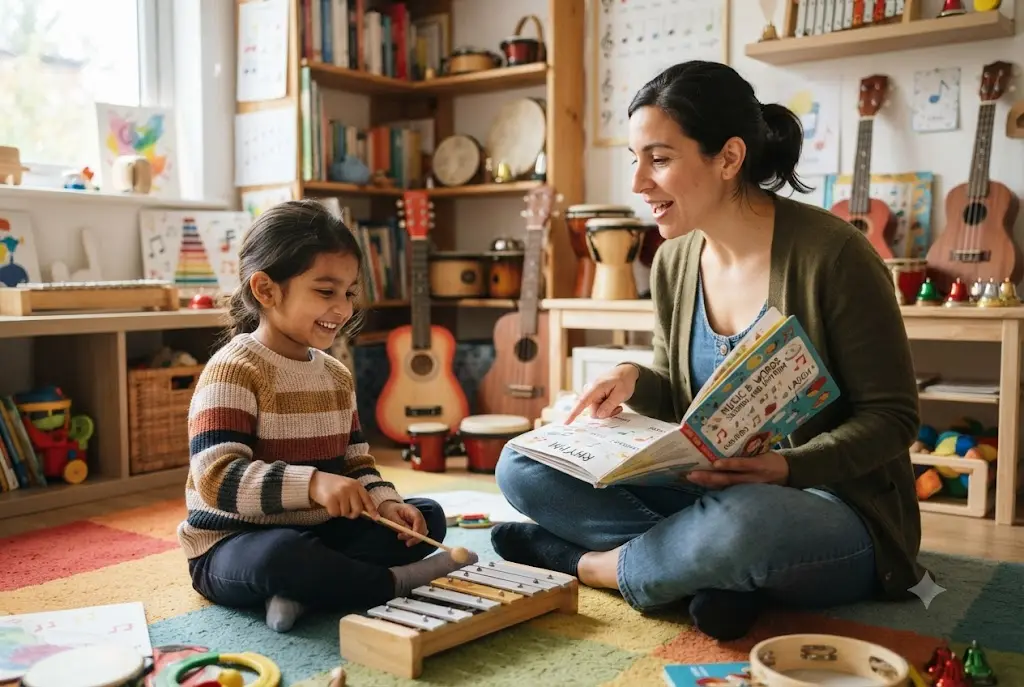
Children benefit greatly from combining music with language learning. Songs, rhymes, and musical games are often used in early education to support language development.
This approach aligns closely with how children naturally acquire language, as explained in how do babies learn language. Just like babies respond to rhythm and repetition, music reinforces these elements in a structured way.
Why Music Works for Kids
- Encourages repetition without boredom
- Builds vocabulary through lyrics
- Improves listening and comprehension skills
- Supports emotional and social development
How Music Supports Adult Language Learners
Adults can also use music to accelerate language learning. While adults may not learn as naturally as children, music helps recreate a similar immersive experience.
For example, learners who follow comprehensible input language learning methods can use songs as meaningful input. Music provides context, emotion, and repetition—all essential for understanding new language structures.
Additionally, individuals can explore their strengths through a language learning aptitude test to see how auditory skills contribute to their learning style.
Practical Ways to Use Music for Language Learning
Here are some effective strategies to incorporate music into your learning routine:
Listen Actively
Pay attention to lyrics, pronunciation, and rhythm. Try to understand the meaning behind the song.
Sing Along
Repeating lyrics helps improve pronunciation and fluency.
Analyze Lyrics
Break down sentences to understand grammar and vocabulary in context.
Use Repetition
Listen to the same song multiple times to reinforce learning.
Scientific Perspective on Music and Language
Research shows that musical training enhances brain plasticity, which is essential for learning new skills. Studies from the American Psychological Association highlight how music improves memory, attention, and auditory processing.
These benefits directly support language acquisition, making music a powerful educational tool.
Common Misconceptions
Music Is Only for Beginners
Music is useful at all levels, from beginners to advanced learners.
You Need Musical Talent
You do not need to be a musician to benefit from music in language learning.
Only Songs in Target Language Help
Even instrumental music can improve focus and cognitive performance.
Final Thoughts on Music and Language Acquisition Skills
The connection between music and language acquisition skills offers a unique and effective way to enhance learning. By combining rhythm, repetition, and emotional engagement, music makes language learning more enjoyable and efficient.
Whether you are a child developing your first language or an adult learning a new one, music can play a transformative role in your journey. Incorporating it into your routine can lead to faster progress and deeper understanding.